





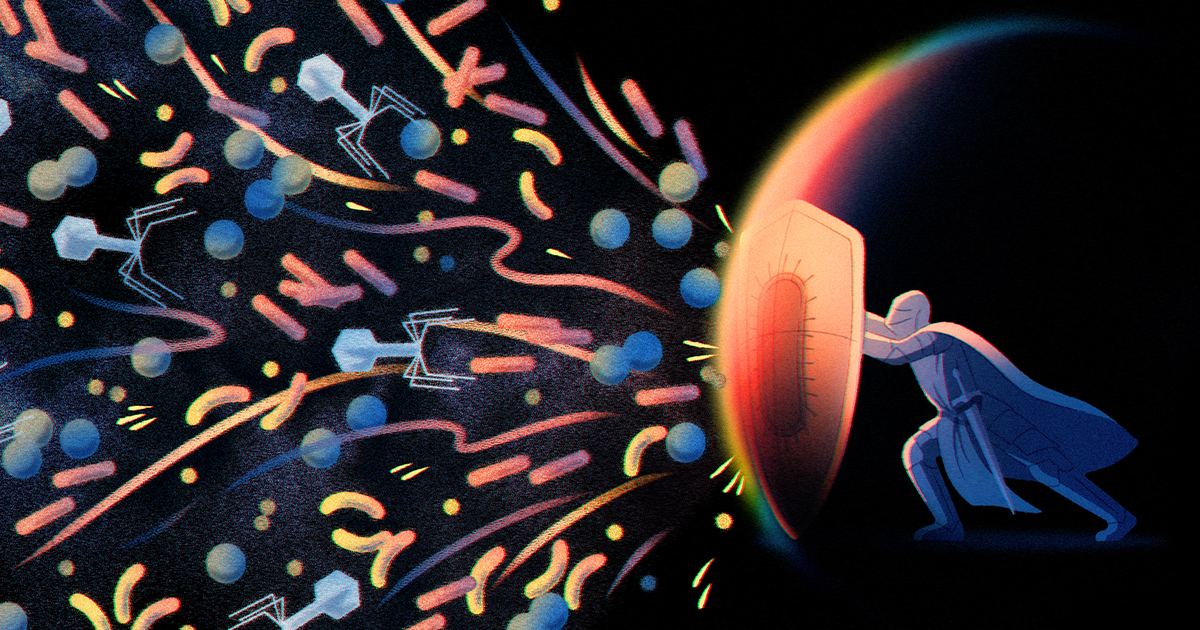
Recent discoveries have unveiled that ancient defense mechanisms evolved by bacteria and viruses still influence our own innate immune system. For billions of years, bacteria and the viruses that infect them, known as bacteriophages or phages, have been locked in a biological arms race, each developing sophisticated methods to outmaneuver the other. Interestingly, some of the defensive tools used by bacteria against phages have remained largely unchanged and are present in plant and animal cells, including humans, dictating how our immune systems combat infections today.
Studies have identified hundreds of new bacterial defense systems against viruses since 2018. These systems are not only ancient but also mechanistically significant for understanding how human immunity works. Microbiologist Philip Kranzusch was among the first to illustrate a connection by showing that components of human immunity are also found in bacteria. This intersection of evolutionary biology and modern immunology has energized research, promising to enhance medical and biotechnological advancements, notably akin to the impact of CRISPR genome editing technology.
Until recently, scientists were aware of only two bacterial virus defense mechanisms: the restriction-modification enzymes, which cut viral DNA at specific points, and the CRISPR systems, which also target DNA. Surprising new insights began to surface when researchers like Rotem Sorek explored bacterial genomes and discovered “defense islands,” regions rich with immune genes and potential new antiviral defenses.
Sorek’s team used computational tools combined with experimental methods to predict and validate new bacterial defense systems against phages, leading to an explosion of identified defense mechanisms. In one notable discovery, the presence of certain pathways in human innate immunity provided more clarity on these ancient bacterial systems’ relevance to multicellular organisms like humans.
The cGAS-STING pathway exemplifies this link. When cGAS detects abnormal DNA in a cell’s cytoplasm, it produces cGAMP molecules, triggering the STING protein and activating immune responses. The origins of such pathways, first fully elucidated by biochemist Zhijian Chen, align with the characteristics of bacterial systems found across species, signifying a shared evolutionary heritage. Kranzusch notably highlighted the structural similarities between bacterial cGAMP-producing enzymes and human cGAS, reinforcing the deep evolutionary connections.
Such findings continue to reveal unprecedented landscapes in human, plant, and animal immunity, potentially unlocking novel approaches to disease treatment and advances in biotechnological tools.
18 Apr 11:46 · The Ancient Weapons Active in Your Immune System Today | Quanta Magazine