







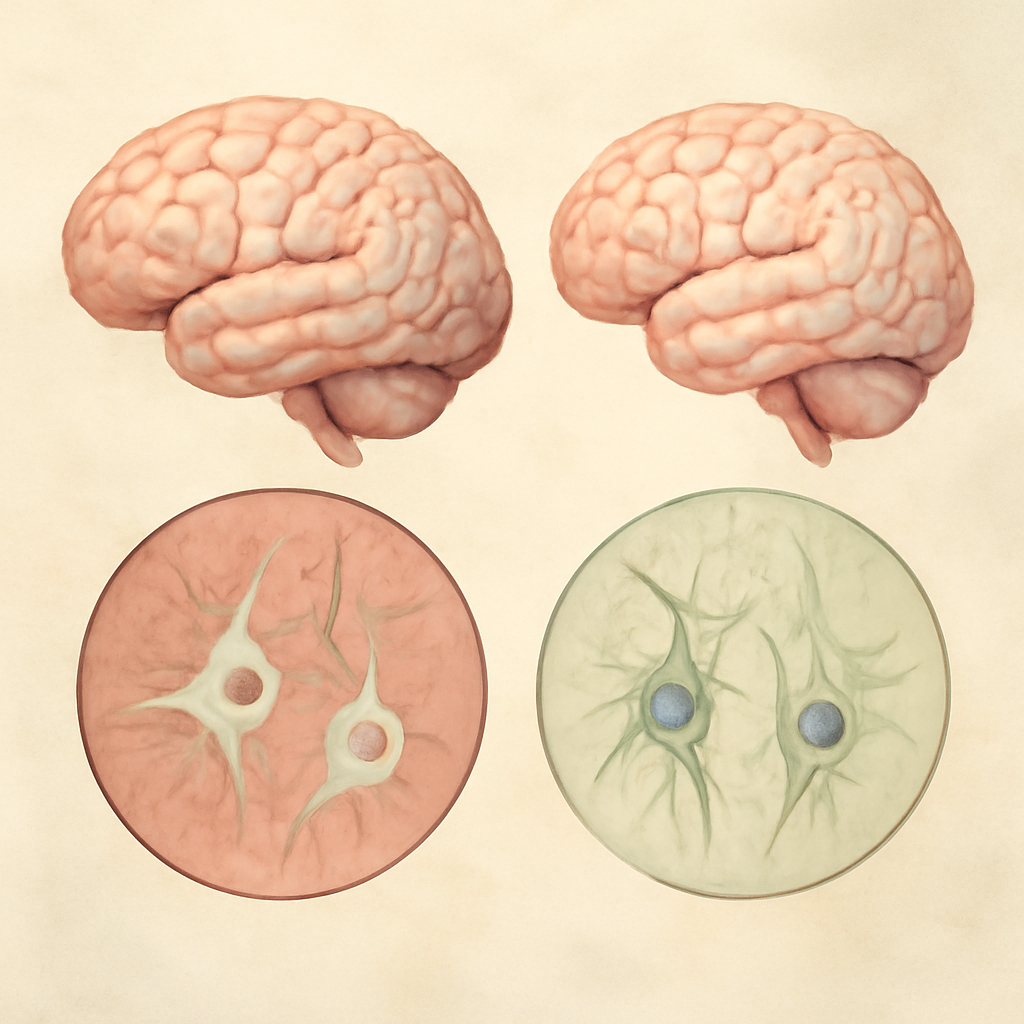
Researchers have uncovered significant differences in gene activity between male and female brains by analyzing over one million brain cells. This study, which categorized sex based on sex chromosomes, provides insights into why risks for certain brain diseases, such as schizophrenia, Alzheimer’s, ADHD, and depression, vary between the sexes. The research identified more than 100 genes with consistent expression differences across various brain regions, offering a molecular perspective on the subtle functional differences between male and female brains, influenced by different hormonal environments.
The study recognizes that sex differences in brain function are extremely subtle and mostly undetectable in daily operations. However, on a molecular level, variations in gene expression may influence the severity of disease variants, suggesting that these differences could have significant implications for disease susceptibility. For instance, conditions like schizophrenia and Parkinson’s are more prevalent in biological males, typically with XY chromosomes, while Alzheimer’s and mood disorders are more common in females, often with XX chromosomes.
Jessica Tollkuhn, a neuroscientist, suggests that understanding these genetic expression differences can lead to better treatments for both sexes. The researchers studied two types of neurons, excitatory and inhibitory, along with glial and other cells in the brain’s cortex, using tissue samples from 30 individuals. They discovered that sex differences accounted for less than 1% of the variation in gene expression across brain cells, highlighting the greater variation within a sex than between sexes.
The study’s findings align with existing knowledge about human genetic variation, emphasizing that while there is considerable diversity within each sex, the genetic differences that do exist between sexes can still have important implications for understanding sex-specific vulnerabilities to brain diseases. This research marks a significant step toward tailoring medical treatments and interventions to better address these inherent biological differences between male and female brains.
18 Apr 12:03 · Revealed: how male and female brain cells differ in gene activity
https://www.nature.com/articles/d41586-026-01227-y