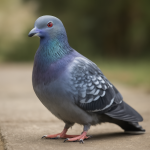


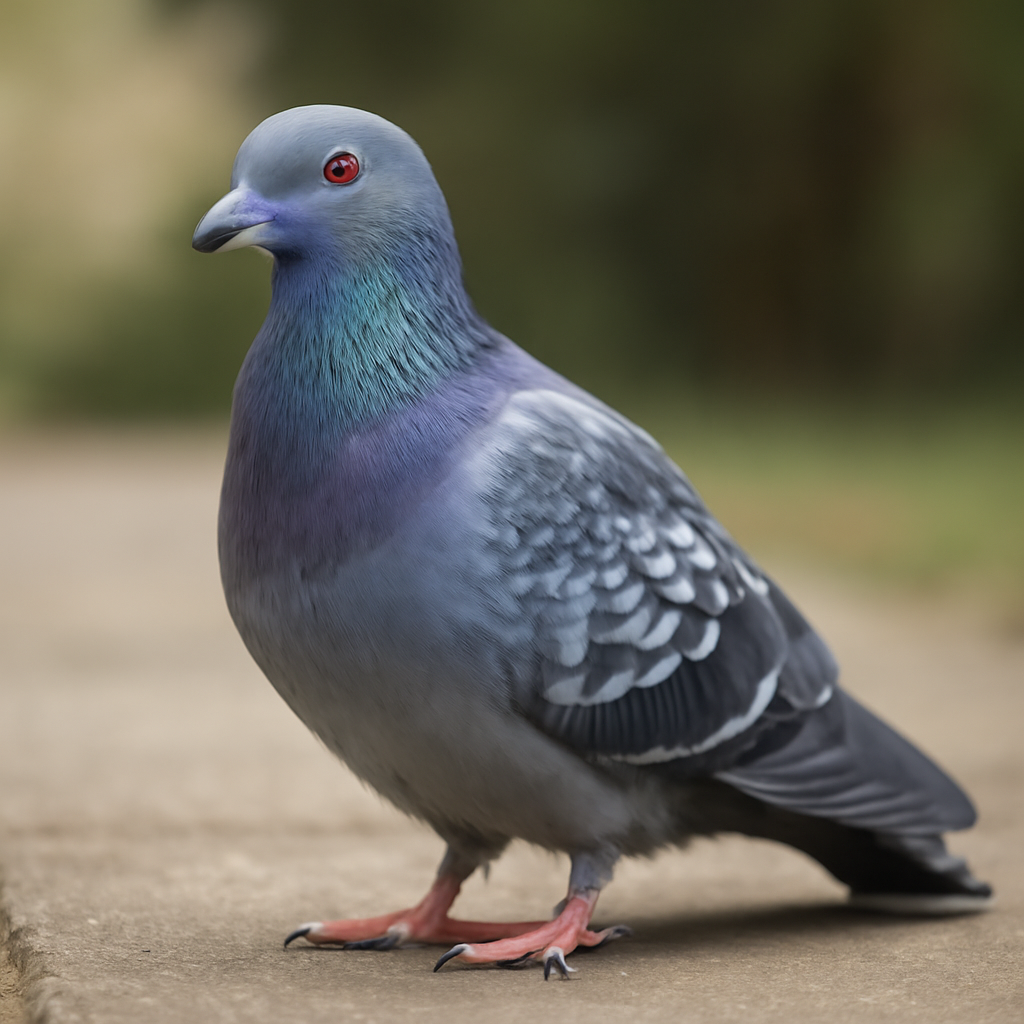
Homing pigeons may rely on a surprising mechanism involving iron-rich immune cells located within their livers to sense Earth’s magnetic field, aiding them in navigation. This discovery is considered a profound development, offering a fresh perspective on the long-standing scientific debate surrounding magnetoreception, one of the most mysterious and controversial animal senses. Many species, including migratory songbirds, sea turtles, sharks, and even dogs, are known to detect and utilize the Earth’s magnetic field for directional guidance, with some theories suggesting a residual magnetic sense in humans.
The precise manner in which this magnetic sense operates has been a topic of extensive discussion. Earlier hypotheses posited that microscopic crystals of magnetite embedded within animal tissues might function as compass needles, aligning with the magnetic field. A more recent idea focused on cryptochromes, proteins found in the retina, which are thought to react to magnetic fields, potentially enabling migratory songbirds to maintain their course even in the dim light of dawn or dusk. Another mechanism recently identified in homing pigeons suggests that variations in magnetic fields induce electric currents in their inner ears, which subsequently stimulate nerves leading to the brain.
The impetus for this new study came from an unexpected conversation between ornithologist Martin Wikelski, who studies migratory species, and immunologist Christian Kurts. During their discussion, Kurts mentioned his finding that macrophages, immune cells obtained from the spleens of mice and humans, contained minute magnetic iron particles. These particles formed as macrophages broke down old red blood cells and sequestered their iron atoms. This observation prompted the key question: could similar immune cells play a role in the remarkable navigational abilities of homing pigeons?
To explore this possibility, Kurts enlisted postdoctoral researcher Clivia Lisowski, who was eager to investigate how cells interact with their environment. Lisowski and her colleagues first examined various pigeon tissues for the presence of these magnetic particles. Contrary to their initial expectation of finding a high concentration in the spleen, which is a primary site for red blood cell recycling in mammals, a sensitive magnetometer indicated that the liver exhibited the strongest magnetic signal among all tissues analyzed. Although relatively faint, this signal was significantly above the instrument’s background noise level, registering more than twenty times higher.
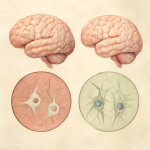
Detailed analysis followed, involving careful staining of thin slices of homing pigeon tissue. This confirmed that a form of iron called ferritin was abundant within liver macrophages, while it was found to be scarce in the spleen and completely absent in tissues from the beak or brain. Further microscopic examination with an electron microscope revealed that many of these iron-rich macrophages in the liver were situated in close proximity to neurons. This anatomical arrangement is noteworthy because, in mammals, neurons in the spleen are known to communicate with macrophages, and both mammalian and avian neurons are connected to the central nervous system, suggesting a potential pathway for sensory information to be transmitted.
The researchers then designed an elegant experiment to test the functionality of these iron-rich macrophages as a magnetic compass. They employed a drug known as clodronate liposomes to temporarily deplete these macrophages. The team trained 34 homing pigeons, a variety renowned for their adept wayfinding, to navigate a 19-kilometer route eastward. Pigeons typically use the Sun’s position for orientation on clear days, but under overcast skies, they depend on their magnetic sense to find their way.
Near Lake Constance, 18 of the birds were injected with clodronate. Twenty-four hours later, these birds were released one by one under conditions of dense cloud cover that entirely obscured the Sun. The pigeons were outfitted with GPS transmitters, enabling real-time tracking of their movements. The results were dramatic: all 18 birds with depleted liver macrophages became profoundly lost, only managing to return to their home loft once the skies had cleared. In contrast, 16 control birds, which received sham injections, flew straight home immediately after release under identical overcast conditions. This stark difference provided compelling evidence that the immune cells in the liver play a critical role in the birds’ magnetic sense. To confirm that the drug did not simply disorient the birds or cause other generalized side effects, the researchers released the drugged pigeons on sunny days, and these birds navigated home without any issues, further supporting the specific role of the macrophages in magnetic perception.
Expert opinion on these findings was largely positive, though underscored the need for continued research. Verner Bingman, a neuroethologist, lauded the discovery as “extraordinarily exciting” but characterized the study as a “proof of concept.” He suggested that future work should focus on directly manipulating magnetic information within the liver, drawing parallels to 1970s experiments where metal coils were used to alter magnetic fields around pigeons’ heads, thereby influencing their flight direction. Susanne Åkesson, an animal ecologist, highlighted remaining questions, particularly concerning the mechanism by which macrophages might transmit magnetic information to adjacent neurons. One proposed idea is that as a bird shifts its position relative to Earth’s magnetic field lines, the ferritin within the macrophages could change its orientation, potentially tugging on intracellular fibers and triggering the release of signaling molecules. Wikelski expressed optimism that if this ferritin mechanism is validated, it could be a widespread phenomenon across a broad spectrum of animals, ranging “from bees to bats to whales to sharks.” However, Catherine Lohmann, a sensory ecologist, offered a note of caution, acknowledging the historically complex and often uncertain path of magnetoreception research. While finding the discovery “intriguing,” she concluded that “time will tell whether it’s correct or not.”
01 Jun 15:05 · ‘Mind-blowing’: Iron-rich immune cells help homing pigeons navigate
https://www.science.org/content/article/mind-blowing-iron-rich-immune-cells-help-homing-pigeons-navigate?utm_source=Live+Audience&utm_campaign=a5e3bc6ced-nature-briefing-daily-20260529&utm_medium=email&utm_term=0_-33f35e09ea-49937136